Reading the NewsB1  Science

Science · Reading practice · B1

Why do onions make us cry?

You are not sad – you are just cooking. Here is what really happens when you cut an onion.

By Levoop · 3-minute read · 245 words · Tap the underlined words to see what they mean
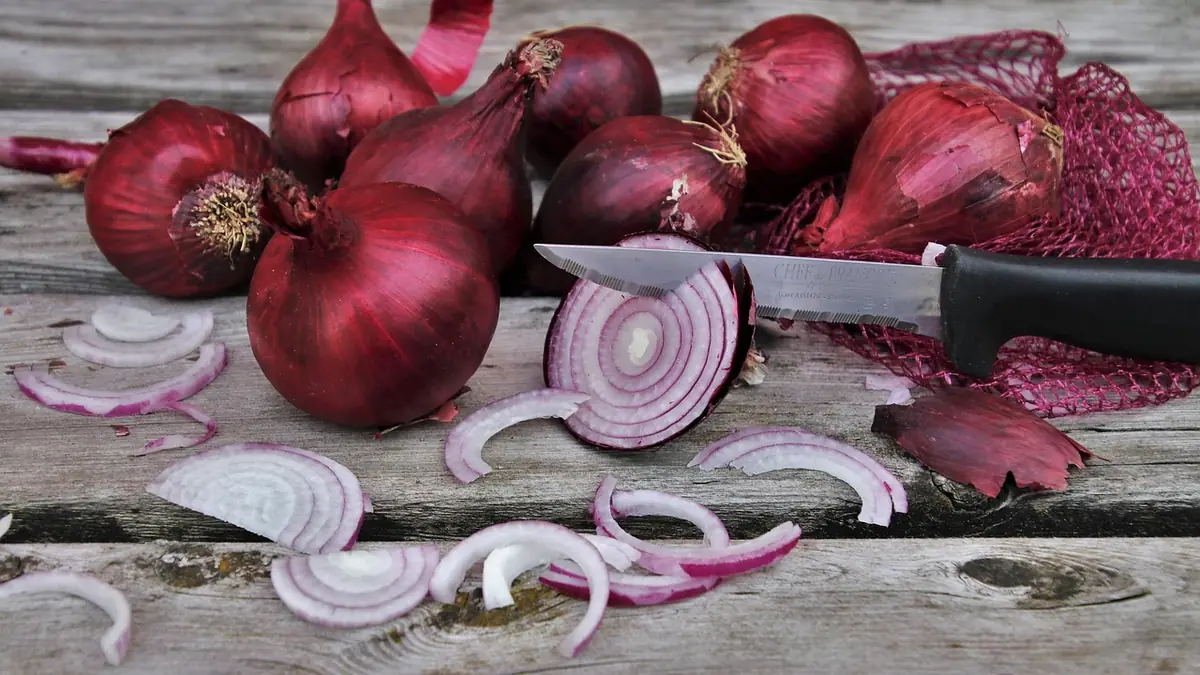
Red onions cut into slices on a wooden board, next to a knife
Cutting an onion breaks thousands of tiny cells.Photo: pasja1000 / Pixabay

You are making dinner, you start cutting an onion and, a few seconds later, are running down your face. It happens to almost everyone. But why does a vegetable make us cry?

The answer is a clever piece of . An onion is made of thousands of tiny . When you cut it, you break these cells, and some substances inside them mix together. This a gas that floats up into the air – and into your eyes.

When the gas touches your eyes, it them. Your eyes in the only way they can: they make tears to wash the gas away. So the tears are not a sign of sadness. They are your body’s way of protecting itself.

Scientists think onions developed this trick to themselves. In the ground, insects and animals that try to eat an onion get the same unpleasant surprise.

Luckily, there are some easy ways to cry less. Many cooks put onions in the fridge for half an hour before cutting them, because cold slows the reaction down. A sharp knife also helps, as it breaks fewer cells than a blunt one. Some people cut onions near an open window or under a kitchen fan, so the gas moves away from their face.

And if none of that works? You could try wearing swimming . You may look a little strange, but your eyes will stay dry – and your will never know.

Reading the News · levoop.com/reading-the-news/why-do-onions-make-us-cry · More articles and Cambridge exam practice at www.levoop.com

Check your understanding

True or False. Every answer comes with an explanation.

1. Cutting an onion breaks lots of tiny cells.

2. The tears happen because the gas makes us feel sad.

3. Onions may use the gas to protect themselves from animals.

4. A blunt knife is better than a sharp one.

5. Putting onions in the fridge before cutting them can help.

Useful expressions

  • a piece of (chemistry / advice / news) – one example of something
    “The answer is a clever piece of chemistry.”
  • slow (something) down – make something happen more slowly
    “Cold slows the chemical reaction down.”
  • none of that works – nothing you tried is successful
    “And if none of that works?”

Key words

  • tears: drops of water that come from your eyes
  • chemistry: the science of what substances are made of and how they change
  • cells: the smallest parts of a living thing
  • produces: makes or creates something
  • irritates: makes a part of your body feel sore or uncomfortable
  • react: do something because of something that has happened
  • defend: protect against attack
  • chemical: connected with chemistry
  • goggles: special glasses that protect your eyes, for example when swimming
  • guests: people you invite to your home

Answer key

  1. True – True: “When you cut it, you break these cells.”
  2. False – False: “the tears are not a sign of sadness. They are your body’s way of protecting itself.”
  3. True – True: “Scientists think onions developed this trick to defend themselves.”
  4. False – False: a sharp knife “breaks fewer cells than a blunt one”.
  5. True – True: “cold slows the chemical reaction down”.

Keep reading

Preparing for the exam? Practise the B1 Preliminary Reading paper, part by part, with every answer explained.