Environment · Reading practice · C1
The tiny forests taking root in our cities
They are no bigger than a tennis court, but supporters say they can bring nature back to the most unlikely places.
By Levoop · 5-minute read · 494 words · Tap the underlined words to see what they mean
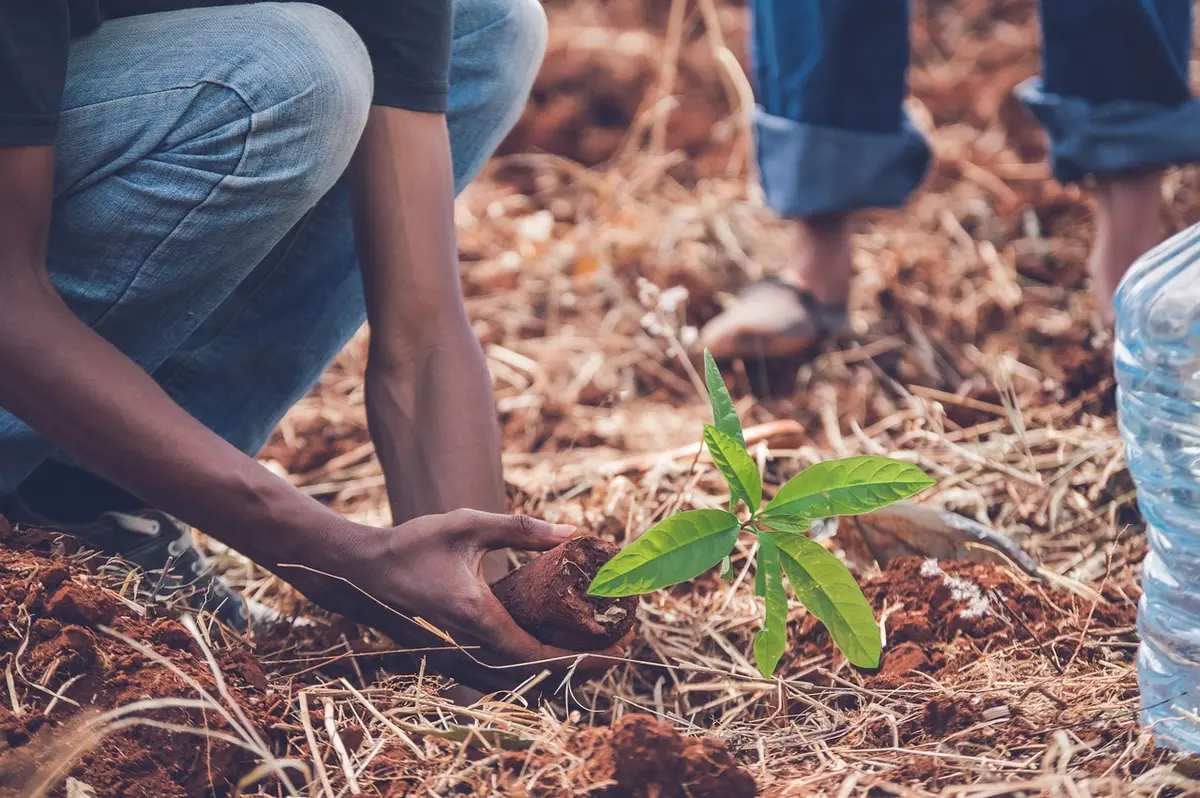
Squeezed between a motorway and a car park, or tucked into the corner of a school playground, a new kind of green space is appearing in cities around the world. At first glance it does not look like much: a dense tangle of young trees and shrubs, packed far more tightly than in any ordinary park. But its believe these “tiny forests” could play a significant role in making urban areas cooler, greener and more welcoming to wildlife.
The approach is usually traced back to Akira Miyawaki, a Japanese botanist who spent decades studying the natural vegetation of his country. He concluded that many landscapes had lost their original, plant communities, and developed a method for recreating them quickly. The soil is first improved, and then dozens of native species – tall trees, smaller trees and shrubs – are planted very close together, often three or more per square metre.
The idea is that the young plants compete fiercely for light, encouraging them to grow upwards rapidly, while the variety of species the layered structure of a natural forest. After two or three years of watering and weeding, the forest is supposed to become largely . Enthusiasts claim that such forests grow far faster than conventional plantations and support much more .
In recent years the method has spread from Japan to India, Europe and beyond, often driven by community groups and schools. Part of its appeal is practical: a tiny forest needs very little land, so it can be created on scraps of ground that would never become a park. Part of it is social. Planting days bring neighbours together, and children who help to plant a forest tend to feel responsible for it as it grows.
Not everyone is convinced, though. Some ecologists argue that the most dramatic claims about growth rates have not been tested enough, and that results vary widely depending on climate, soil and care. Dense planting means that many of the trees will not survive, which some see as wasteful, and the initial costs per square metre can be considerably higher than for conventional tree planting. There is also a risk, critics warn, that small, eye-catching projects could be used to much larger developments that destroy existing habitats.
Most specialists agree that tiny forests are no for protecting large, established woodlands, which store far more carbon and support ecosystems that took centuries to develop. Seen as a complement rather than a replacement, however, they have obvious attractions. Even a small patch of trees can provide shade, absorb rainwater and offer a refuge for insects and birds in an otherwise landscape of concrete.
Perhaps their greatest value lies in what they represent. In cities where nature often feels distant, a forest the size of a tennis court is a daily, tangible reminder that green space does not have to be somewhere else – it can grow right outside the front door.
Reading the News · levoop.com/reading-the-news/the-tiny-forests-growing-in-cities · More articles and Cambridge exam practice at www.levoop.com